Category: Press releases

Statement Regarding The Stationing Of French Troops In South Cyprus

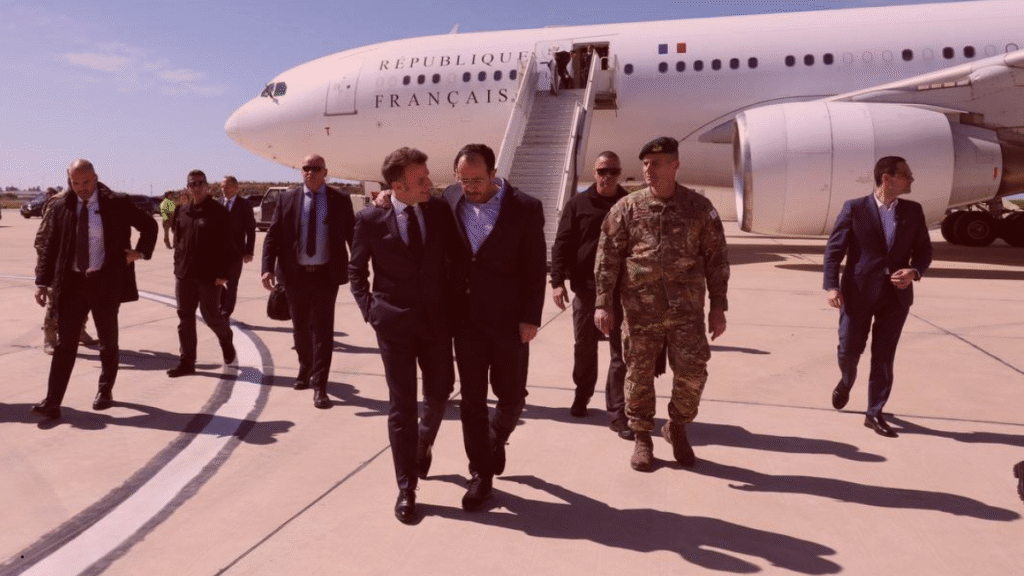
The Freedom and Fairness for Northern Cyprus campaign strongly condemns the signing of the Status of Forces Agreement between the Greek Cypriot administration and France, which establishes a legal framework for the stationing and operation of French military personnel in South Cyprus.

This agreement represents a further step in the ongoing militarisation of South Cyprus and follows an expanding network of military and strategic cooperation between the Greek Cypriot administration and foreign powers, including France, Greece and Israel. At a time when confidence-building and regional stability should be the priority, the decision to deepen foreign military involvement on the island sends entirely the wrong message.

The Greek Cypriot leadership has sought to present this arrangement as a humanitarian agreement. Such a characterisation is difficult to reconcile with the substance of the agreement itself. An arrangement which provides for the deployment of foreign military personnel, enhanced defence cooperation, access to facilities and expanded military coordination is, by any reasonable assessment, a defence agreement. The public deserves clarity regarding the true nature of what has been agreed.

Of particular concern is the fact that this agreement has been concluded without any consultation with the Turkish Cypriot people, the Turkish Republic of Northern Cyprus, or the other guarantor powers on the island, namely Türkiye and the United Kingdom. Given the implications such arrangements have for the security and strategic balance of Cyprus, the exclusion of key stakeholders raises serious questions about both the process and intent behind the agreement.

Cyprus is not a unitary state represented solely by the Greek Cypriot administration. It remains an island inhabited by two peoples, with two administrations, whose political future has yet to be resolved. The continued practice of making unilateral decisions affecting the security, strategic direction and future of the entire island, while claiming to act on behalf of all Cypriots, remains one of the central obstacles to building trust between the two sides.

For more than fifty years, Cyprus has enjoyed a period of relative peace and stability. Rather than pursuing policies which encourage cooperation, mutual confidence and meaningful engagement between the two sides, the Greek Cypriot administration has increasingly chosen a path which combines the international isolation of the Turkish Cypriots with the growing militarisation of South Cyprus through external partnerships and foreign military involvement.

This approach is both unnecessary and deeply concerning. Efforts to alter the strategic balance on the island without the participation or consent of the Turkish Cypriot side risk increasing tensions, undermining confidence and further complicating an already unresolved dispute.

The future security of Cyprus cannot be determined over the heads of the Turkish Cypriot people. Any sustainable approach to the island’s future must recognise that decisions affecting its security, sovereignty and stability concern both peoples and cannot be imposed unilaterally by one side.

The Freedom and Fairness for Northern Cyprus campaign therefore calls upon both France and the Greek Cypriot administration to reconsider this course of action and to pursue policies which contribute to stability, dialogue and regional cooperation rather than further militarisation.

Letter Addressed to the Commonwealth Sports Executive Board Regarding the Exclusion of Turkish Cypriots from Commonwealth Torch Events in Cyprus

Dear Dr Rukare,

I hope this letter finds you well.

I am writing on behalf of the Freedom and Fairness for Northern Cyprus (FFNC) campaign regarding the decision to carry the Commonwealth Torch exclusively within the Greek Cypriot Administration of Southern Cyprus during its visit to the island between 20–23 May 2026, whilst completely excluding the Turkish Cypriot people.

We believe this decision is deeply regrettable and inconsistent with the values of equality, inclusiveness, and fairness that the Commonwealth seeks to uphold.

For decades, Turkish Cypriots have faced unjust isolation in international sport, culture, and diplomacy. Despite repeated calls for engagement and inclusion, Turkish Cypriot athletes and institutions continue to encounter barriers that prevent them from participating equally in the international sphere. Against this backdrop, the complete exclusion of Northern Cyprus from an event intended to symbolise unity, friendship, and shared Commonwealth values has caused significant disappointment amongst Turkish Cypriots both on the island and abroad.

Cyprus is not home to a single political or social reality. It is an island with two peoples, two administrations, and a long and complex history. Ignoring one side of the island entirely, particularly in the context of a symbolic international event, risks reinforcing division rather than encouraging understanding or inclusivity.

As an organisation committed to fairness, dialogue, and peaceful engagement, FFNC firmly believes that sport and symbolic international initiatives should serve as bridges between peoples rather than reflect longstanding political exclusions.

We therefore respectfully urge the Commonwealth Sport Executive Board to reflect on the concerns being raised by Turkish Cypriots and to consider how future Commonwealth initiatives involving Cyprus can better represent both peoples on the island in a fair and balanced manner.

The Turkish Cypriot people should not continue to be overlooked in international sporting and cultural platforms that claim to stand for equality and inclusiveness.

Yours sincerely,

Freedom and Fairness for Northern Cyprus (FFNC)

Letter to the Advertising Standards Authority regarding an offensive and inciteful billboard in Southgate, London

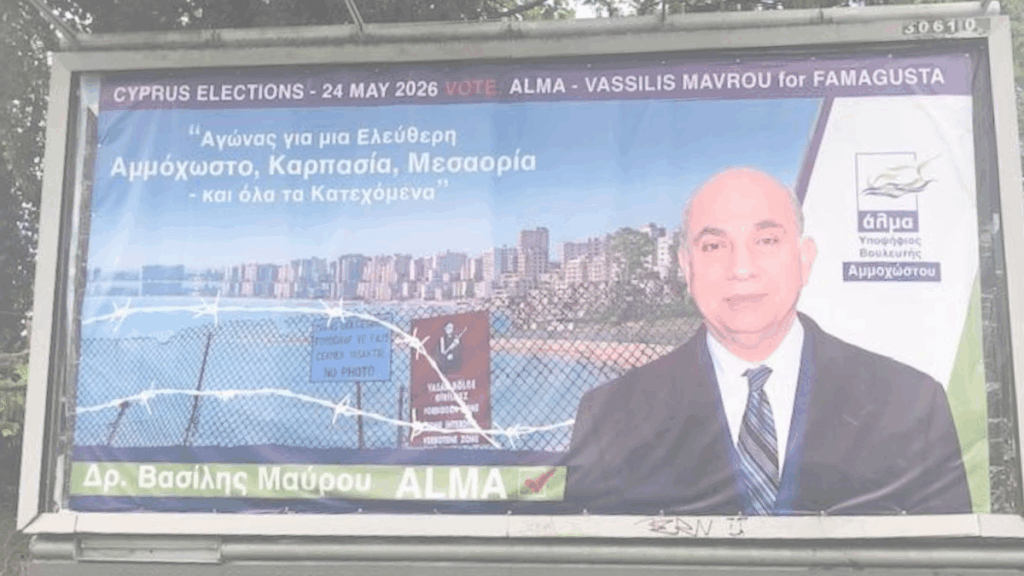
We are writing to raise a formal concern regarding a political billboard currently displayed in Southgate, London, promoting an overseas election campaign in Cyprus.

The advert calls for the “liberation” of areas in Northern Cyprus, using language that describes these regions as “occupied.” While such framing may form part of political discourse in Cyprus, its use within a UK public space – particularly in a diverse area such as Enfield – is inappropriate.

Northern Cyprus is home to the Turkish Cypriot people, regardless of the ongoing political situation on the island. It is also closely connected to the United Kingdom, where an estimated 300,000 British Turkish Cypriots live. This is therefore not a distant or abstract issue, but one that directly touches communities here in the UK.

In this context, the advert is clearly divisive and inflammatory. It challenges the legitimacy of people’s homes and communities, and introduces a highly charged narrative into a shared public environment. This is already generating concern locally and has the potential to undermine community cohesion.

We are also concerned by the broader principle of allowing overseas political campaign material – particularly relating to contested territorial issues – to be displayed in UK public spaces without appropriate scrutiny.

We therefore respectfully ask the Advertising Standards Authority to review this advert under its codes relating to harm, offence, and social responsibility, and to consider whether it is appropriate for such messaging to be displayed in a shared public environment.

We appreciate your attention to this matter and look forward to your response.

Note for readers:

Submit your own complaint: https://www.asa.org.uk/make-a-complaint.html

Any Talks Regarding the British Bases Must Include the Turkish Cypriots

The recent European Council conclusions, alongside statements from the Greek Cypriot leadership regarding potential discussions with the United Kingdom on the future of the British Sovereign Base Areas, mark a significant development in the evolving situation on the island.

Whatever form these discussions take, one point is non-negotiable: Turkish Cypriots cannot be excluded from any process concerning sovereignty, security, or the future of Cyprus.

Turkish Cypriots are not a minority. They are one of the two co-founding peoples of the 1960 Republic of Cyprus, established on the basis of sovereign equality, political equality, and partnership. Any attempt to treat questions of sovereignty as the domain of only one side fundamentally disregards this reality.

This is not merely a bilateral matter between the United Kingdom and the Greek Cypriot administration. It carries broader implications for the political balance, legal foundations, and long-term stability of the island. Recent engagements by UK officials in Cyprus, including the current visit by Minister Doughty, underline the importance of ensuring that such interactions reflect the full reality of the island, including meaningful engagement with the Turkish Cypriots.

Past experience is clear: one-sided international engagement on Cyprus does not resolve disputes – it entrenches them. Processes that exclude Turkish Cypriots deepen division, undermine trust, and risk further destabilising an already sensitive situation.

If discussions are to proceed on the UK Sovereign Base Areas, or on any issue touching sovereignty and security, they must reflect the reality that there are two peoples on the island and include Turkish Cypriots as equal participants.

This is not a matter of preference, but of principle. Any process that ignores this will lack both legitimacy and long-term credibility.

Statement on the Escalating Security Situation in Cyprus

The Freedom and Fairness for Northern Cyprus campaign is closely monitoring the rapidly evolving security situation across Cyprus and the wider Eastern Mediterranean.

Recent developments on the island underline the seriousness of the moment. A drone strike on the United Kingdom’s RAF Akrotiri base in South Cyprus, followed by the interception of further aerial threats, has demonstrated how quickly the island can become exposed to regional conflict. In the days since, there has also been a visible military build-up in Southern Cyprus, with Greece dispatching fighter jets and naval vessels and France deploying additional defence systems and assets. The United Kingdom has also signalled that it intends to reinforce its presence around the island in the coming days.

At moments such as these, the safety and stability of both peoples of Cyprus must remain the overriding priority.

The United Kingdom holds an important position on the island. In addition to maintaining two Sovereign Base Areas at Akrotiri and Dhekelia, the UK is also one of the guarantor powers for Cyprus. That role carries with it responsibilities toward both peoples of the island – Turkish Cypriots and Greek Cypriots alike.

Yet much of the public discussion surrounding the current situation has focused almost exclusively on the British bases and the Greek Cypriot administration in Southern Cyprus. Far less attention has been given to Northern Cyprus, where approximately 20,000 British nationals live alongside the Turkish Cypriot people.

The safety and well-being of both British nationals and Turkish Cypriots cannot be overlooked. They are directly affected by regional instability and must be equally considered when governments assess the evolving security situation on the island.

FFNC has been in contact with relevant authorities in Northern Cyprus as well as members of the British community living there, and we will continue to follow developments closely.

For more than fifty years, Türkiye’s security presence on the island has served as the primary guarantee of safety and stability for the Turkish Cypriot people. That presence has played a decisive role in preserving peace on the island and ensuring that Turkish Cypriots remain protected during periods of regional instability.

At a time when tensions across the region are rising, that security guarantee continues to provide a vital element of deterrence and stability in Northern Cyprus.

The evolving geopolitical environment surrounding Cyprus must also be understood in its wider context. In recent years, the leadership of the Greek Cypriot administration has pursued deeper military cooperation with a number of external actors and defence partnerships in the region. Such alignments inevitably shape how Cyprus is perceived within the broader strategic environment of the Eastern Mediterranean.

Periods of regional confrontation require restraint, responsibility and careful leadership. Decisions taken on the island can have consequences that extend far beyond its shores.

The United Kingdom has faced moments like this before. In both 1963 and 1974 the UK failed to act in a way that prevented the breakdown of order and the tragedies that followed. At a time of rising regional instability, a serious question therefore arises: will the United Kingdom once again fall short of its responsibilities as a guarantor power, or will it ensure that the safety of both peoples of Cyprus is fully upheld?

FFNC will continue to monitor developments closely and engage with relevant stakeholders to ensure that the interests and security of both the Turkish Cypriot people and the many British nationals who live among them in Northern Cyprus remain fully recognised.

Peace and stability on Cyprus must remain the shared objective of all those with responsibilities on the island.

An Open Letter to António Guterres, Secretary-General of the United Nations

To Mr Guterres,

We write on behalf of the Freedom and Fairness for Northern Cyprus (FFNC) campaign in response to the recent remarks made on 15 February 2026 by your Personal Envoy on Cyprus, Ms Maria Angela Holguín.

FFNC supports dialogue and a peaceful, sustainable future on the island. However, we are concerned that the current framing risks repeating the same patterns that have defined the Cyprus process for decades: emphasis on preparation, patience, and confidence-building, while the core structural imbalance that has obstructed progress remains unaddressed.

We support President Tufan Erhürman’s call for clarity and realism in any renewed process. In particular, we support his four-point methodology in full:

– Political equality must be secured before negotiations begin.
– The process must not restart from zero.
– A clear timeframe should be established.
– If talks collapse, there must be no automatic return to the status quo.

These are not rhetorical demands. They reflect the lived experience of the Turkish Cypriot people, who have repeatedly engaged in UN-led processes in good faith, only to encounter familiar outcomes.

The Turkish Cypriot people have heard similar language before – in 2004 ahead of the Annan Plan referendums, and again in 2017 during the negotiations that culminated at Crans-Montana.

In April 2004, the Turkish Cypriot people voted 64.9% in favour of reunification under the Annan Plan. The Greek Cypriot side voted 75.8% against it. The historical record is clear: one side endorsed a comprehensive UN-backed settlement; the other rejected it.

Following the referendum, then UN Secretary-General Kofi Annan stated that the decision of the Turkish Cypriots was to be welcomed; that their vote had “undone any rationale for pressuring and isolating them”; and that States should act to eliminate unnecessary restrictions that isolate the Turkish Cypriots – explicitly not for recognition, but as a positive contribution to reunification.

Despite this, isolation has continued. The Turkish Cypriot people remain excluded from direct trade, direct flights, and full international participation, while the side that rejected the settlement retained exclusive international recognition and the advantages that flow from it.

In 2017 at Crans-Montana, expectations were once again raised. Yet the talks collapsed because the fundamental issues – effective political equality, security frameworks, decision-making parity, and genuine power-sharing – were not accepted in practice. Political equality cannot exist in name alone while being denied in substance.

The central issue is not insufficient meetings or inadequate preparation. It is structural asymmetry.

The 1960 Republic of Cyprus was established as a bi-communal partnership between two co-founding peoples. That partnership collapsed in 1963, when Turkish Cypriots were forcibly excluded from state institutions following unconstitutional changes and violence. United Nations Security Council Resolution 186 in 1964, adopted in a specific and urgent context, nonetheless had the long-term effect of recognising the Greek Cypriot administration as the “Government of Cyprus” for international purposes, despite the constitutional breakdown of the partnership state. This decision institutionalised a structural imbalance that continues to define the process today.

As long as one side is treated as the sole recognised state – enjoying international legitimacy, diplomatic standing, and unilateral access to international institutions – it has little incentive to negotiate on the basis of genuine equality. Maintaining the isolation of the Turkish Cypriot people further entrenches this imbalance and reduces the cost of intransigence.

Negotiations conducted under these conditions cannot produce a fair and lasting outcome.

If this time is to be different, as has been stated, then the UN framework must move beyond repetition. The status quo – where one side retains all advantages of recognition and the other is expected to negotiate from a disadvantaged and isolated position – is not neutral. It shapes incentives, behaviour, and outcomes.

Justice, respect, and equality are not rhetorical aspirations. They are prerequisites for any sustainable settlement. Without addressing the structural asymmetry at the heart of the Cyprus issue, further rounds of talks risk becoming another cycle of familiar language and predictable failure.

We respectfully urge that future UN efforts explicitly recognise and confront this imbalance, and that renewed engagement be anchored in guaranteed political equality from the outset.

Yours sincerely,

Freedom and Fairness for Northern Cyprus (FFNC)

What is the Immovable Property Commission (IPC)?

The Immovable Property Commission (IPC) was established in 2006 under the Immovable Property Law (No. 67/2005) of the Turkish Republic of Northern Cyprus (TRNC). Its creation followed rulings by the European Court of Human Rights (ECHR) – most notably in the Xenides-Arestis v. Turkey case – which called for an effective domestic remedy to address property claims arising from the events in Cyprus.

On 1 March 2010, the ECHR ruled in Demopoulos and Others v. Turkey that the IPC provides such an effective domestic legal remedy for property issues in Northern Cyprus. As a result, the Court now requires all property-related complaints to be first brought before the IPC before they can be considered at the international level.

The IPC officially began its work on 17 March 2006, with its President, Vice-President, and members appointed by the Supreme Council of Judicature of the TRNC. It is composed of both Turkish Cypriot and international members to ensure impartiality and compliance with international standards.

Mandate and Function

The Commission reviews applications concerning restitution, compensation, or exchange of properties left behind in Northern Cyprus prior to 1974. Its decisions are guided by the long-standing principles of bi-zonality and bi-communality, as reflected in the 1977–1979 High-Level Agreements and subsequent United Nations settlement plans.

The IPC aims to resolve individual property disputes fairly and efficiently, while respecting both the rights of displaced owners and those of the Turkish Cypriots currently residing on or using those properties.

Activity and Results

As of October 2025, the IPC has received 8,375 applications, of which 2,131 have been concluded.
In total, it has awarded £570.8 million in compensation to applicants.
In addition to compensation, the Commission has also issued rulings for exchange, restitution, and combined solutions in specific cases.

Recognition by the ECHR

The European Court of Human Rights officially recognises the IPC as a valid domestic legal mechanism for property claims in Cyprus. This recognition affirms that the IPC operates in line with international legal standards and provides a functional avenue for Greek Cypriot applicants seeking redress.

However, it is important to note that no equivalent mechanism exists for Turkish Cypriots who lost their homes, land, and property during the 1950s, 1960s, and early 1970s – long before the division of the island – due to violence, displacement, and discriminatory policies against them.

Conclusion

The Immovable Property Commission continues to serve as an independent and recognised institution providing justice, stability, and due process for property disputes in Cyprus. By offering a structured and lawful process, it contributes to the broader goal of ensuring peace, fairness, and mutual respect between the island’s two peoples.

Statement: New York Trilateral Talks

Statement on the UN Trilateral Meeting in New York

The Freedom and Fairness for Northern Cyprus campaign welcomes President Ersin Tatar’s constructive participation in the latest round of discussions held in New York under the auspices of the United Nations.

President Tatar has once again reaffirmed the unwavering position of the Turkish Cypriot side – a settlement based on two sovereign, equal states with equal international status. After more than fifty years of failed and exhausted federal negotiations, it is clear that a new, realistic, and sustainable model is needed to ensure peace, stability, and cooperation on the island.

The two-state solution proposed by President Tatar offers the most practical path forward: one that reflects the realities on the ground and provides a foundation for good neighbourly relations, mutual respect, and genuine partnership between the Turkish Cypriot and Greek Cypriot peoples.

We express serious concern over the recent actions of the Greek Cypriot leadership, including the militarisation of the South through Israeli missile systems, the arbitrary arrests of Turkish Cypriots, and measures designed to damage the Turkish Cypriot economy and deepen isolation. Such steps only escalate tensions and undermine the prospects for lasting peace.

The Turkish Cypriot people deserve security, dignity, and international recognition. We stand firmly with President Tatar’s vision, which represents not only the will of his people but also the only viable and fair path toward stability and coexistence in Cyprus.

Freedom and Fairness for Northern Cyprus

Turkish Cypriot NGOs Deliver Letters to UK Prime Minister and Foreign Secretary on Afzal Khan MP’s Forced Resignation

Representatives from the Freedom and Fairness for Northern Cyprus (FFNC) campaign, Embargoed!, and the British Turkish Cypriot Association (BTCA) visited both the Foreign, Commonwealth and Development Office (FCDO) and 10 Downing Street to deliver letters addressed to Prime Minister Keir Starmer, Foreign Secretary David Lammy, and Stephen Doughty, Minister of State for Europe and North America.

The letters expressed outrage at the forced resignation of Afzal Khan MP as the UK’s Trade Envoy to Türkiye following political pressure over his recent personal visit to the Turkish Republic of Northern Cyprus (TRNC).

Rikki Williams, Co-Chair of the FFNC campaign, said:
“It is outrageous that a foreign power can dictate what the UK government does. While Afzal Khan has resigned, the government’s failure to support him is deeply troubling.”

Nejla Clements, Secretary of Embargoed!, said:
“As Embargoed! we are appalled at Afzal Khan’s fate simply for engaging with Northern Cyprus in a private capacity. We have written to Stephen Doughty to explain Embargoed!’s stance and the Turkish Cypriot position. We also detailed our objections and made it clear why this is unacceptable.”

In addition to the joint letters, Embargoed! has also written separately to MPs Alexander Douglas, Dame Priti Patel, Wendy Morton, and Alicia Kearns, setting out the Turkish Cypriot community’s objections and urging them to reconsider their positions.

Çetin Ramadan, Co-Chair of the FFNC campaign, said:
“Labour prides itself on fairness, yet Afzal Khan has been forced out for a personal visit. His trip was primarily to pay respects at a Muslim site, Sheikh Nazim’s shrine, but the whole issue has been unnecessarily politicised.”

This follows strong criticism from Sammy Wilson MP, who condemned Khan’s resignation as “deeply unfair and unjust.” Wilson also accused Conservative MPs of hypocrisy, highlighting that those attacking Khan have themselves visited Northern Cyprus or other unrecognised territories such as Somaliland.

Further backing came from Lord Northbrook, Vice Chair of the All-Party Parliamentary Group (APPG) for the Turkish Republic of Northern Cyprus, who described the political pressure that led to Khan’s resignation as “deeply regrettable.” Lord Northbrook stressed that parliamentarians must be free to engage with Turkish Cypriots without fear of reprisal, warning that attempts to silence dialogue undermine democracy and parliamentary independence.

Vice Chair of TRNC APPG Issues Statement on Afzal Khan’s Resignation

Statement from the Vice Chair of the All-Party Parliamentary Group for the Turkish Republic of Northern Cyprus

As the Vice Chair of the All-Party Parliamentary Group (APPG) for the Turkish Republic of Northern Cyprus, I, along with fellow Members of both Houses of Parliament who serve on this Group, wish to express our deep concern at the resignation of Afzal Khan MP from his position as the UK’s Trade Envoy to Türkiye, following sustained pressure from outside groups.

Mr Khan’s recent visit to the TRNC was conducted in a personal capacity, with the simple aim of fostering dialogue, understanding, and engagement. For such a visit to be met with hostility and the kind of political pressure that has led to his resignation is deeply regrettable.

Parliamentarians must be free to engage with communities, build relationships, and listen to different perspectives without fear of reprisal. Attempts to intimidate or silence parliamentarians undermine the very principles of democratic representation and parliamentary independence.

The APPG for the TRNC will continue its important work of promoting dialogue, deepening understanding of the issues facing Turkish Cypriots, and ensuring that their voices are heard in Westminster.

We stand in solidarity with Afzal Khan MP and reaffirm that Members of Parliament and Peers should never be deterred from engaging constructively on matters of international importance.

Lord Northbrook
Vice Chair, APPG for the Turkish Republic of Northern Cyprus