Tag: Cyprus

Nick de Bois: EU Involvement in Cyprus Raises Serious Doubts Over Neutrality and Sovereignty

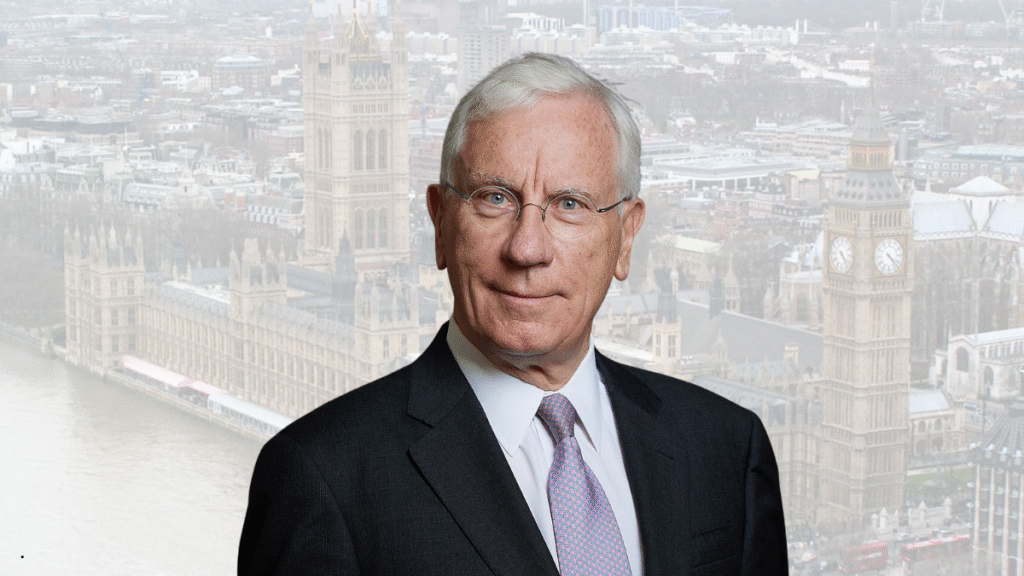
In his latest piece for Politics.co.uk, former MP and ex-Special Adviser to the Department for Exiting the European Union, Nick de Bois, sets out a clear warning over growing European Union involvement in Cyprus-related discussions. He argues that recent signals from the European Council indicate a shift from neutral observation to active participation in matters concerning the United Kingdom’s Sovereign Base Areas – a move he describes as a direct intrusion into British sovereignty.

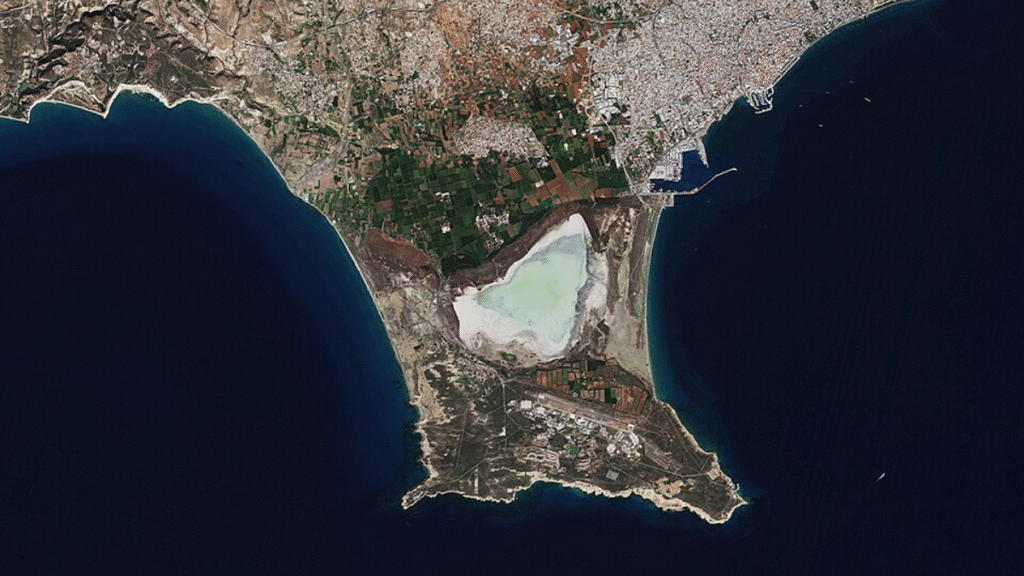
De Bois stresses that the bases at Akrotiri and Dhekelia are not subject to negotiation, having been established as sovereign British territory under the 1960 independence arrangements. He cautions that even informal or exploratory discussions risk evolving into sustained political pressure, noting that similar patterns have been observed in other cases where long-standing arrangements were gradually challenged and weakened.

Crucially, he highlights the issue of EU impartiality in the Cyprus context. Referencing the 2004 Annan Plan, he points out that Turkish Cypriots supported reunification while the Greek Cypriot side rejected it, yet EU accession proceeded in a way that entrenched division and left Turkish Cypriots isolated. The Freedom and Fairness for Northern Cyprus (FFNC) campaign reiterates that any discussions concerning sovereignty, security, or the future of the island must include Turkish Cypriots, warning that continued exclusion will only deepen division and undermine prospects for a lasting settlement.

Letter to the Advertising Standards Authority regarding an offensive and inciteful billboard in Southgate, London

We are writing to raise a formal concern regarding a political billboard currently displayed in Southgate, London, promoting an overseas election campaign in Cyprus.

The advert calls for the “liberation” of areas in Northern Cyprus, using language that describes these regions as “occupied.” While such framing may form part of political discourse in Cyprus, its use within a UK public space – particularly in a diverse area such as Enfield – is inappropriate.

Northern Cyprus is home to the Turkish Cypriot people, regardless of the ongoing political situation on the island. It is also closely connected to the United Kingdom, where an estimated 300,000 British Turkish Cypriots live. This is therefore not a distant or abstract issue, but one that directly touches communities here in the UK.

In this context, the advert is clearly divisive and inflammatory. It challenges the legitimacy of people’s homes and communities, and introduces a highly charged narrative into a shared public environment. This is already generating concern locally and has the potential to undermine community cohesion.

We are also concerned by the broader principle of allowing overseas political campaign material – particularly relating to contested territorial issues – to be displayed in UK public spaces without appropriate scrutiny.

We therefore respectfully ask the Advertising Standards Authority to review this advert under its codes relating to harm, offence, and social responsibility, and to consider whether it is appropriate for such messaging to be displayed in a shared public environment.

We appreciate your attention to this matter and look forward to your response.

Note for readers:

Submit your own complaint: https://www.asa.org.uk/make-a-complaint.html

EU Pressure on UK Cyprus Bases Sparks Renewed Debate Over Turkish Cypriot Exclusion

The Express reports on growing political pressure surrounding the United Kingdom’s Sovereign Base Areas in Cyprus, with warnings that the European Union is attempting to insert itself into discussions over British sovereignty. The article highlights concerns raised by former MP and ex-Special Adviser to the Department for Exiting the European Union, Nick de Bois, who cautions against any process that could reopen what has long been considered a settled issue.

De Bois argues that there is a “coordinated effort” involving the EU to challenge the status of the bases, stressing that they are sovereign British territory established by treaty in 1960 and are not open to negotiation. He warns that even informal discussions risk evolving into sustained political pressure, drawing parallels with other cases where longstanding arrangements have been gradually undermined.

Crucially, the article again brings attention to the broader Cyprus context, with de Bois highlighting the European Union’s record on impartiality. He points to the 2004 Annan Plan referendum, where Turkish Cypriots supported reunification but were left isolated after the Greek Cypriot rejection was followed by EU accession. The Freedom and Fairness for Northern Cyprus (FFNC) campaign reiterates that any discussions concerning sovereignty, security, or the future of the island must include Turkish Cypriots, warning that exclusion will only deepen division.

Calls to Reopen UK Base Talks in Cyprus Raise Questions Over Exclusion of Turkish Cypriots

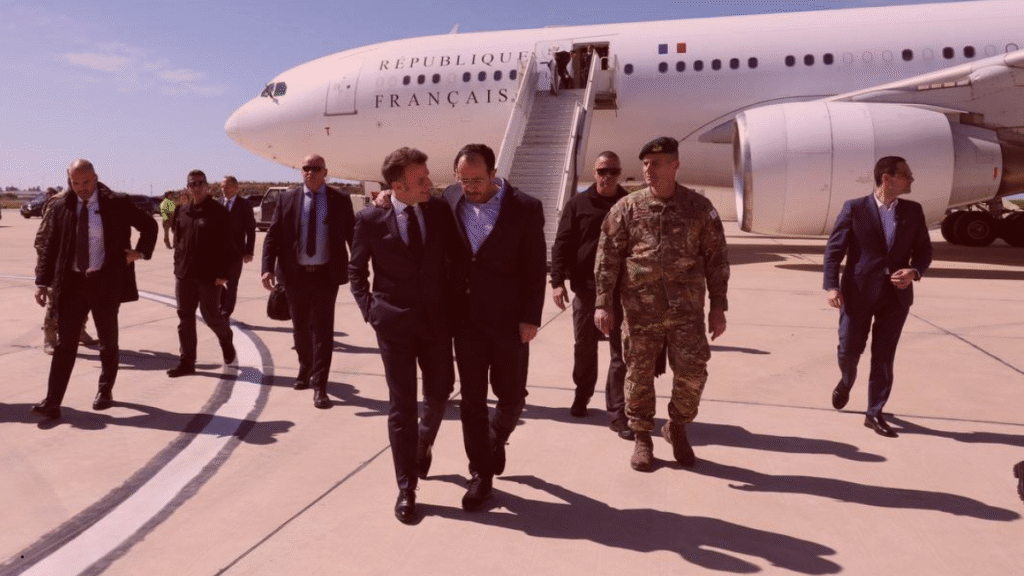
The Independent reports on rising tensions surrounding the United Kingdom’s Sovereign Base Areas in Cyprus, particularly RAF Akrotiri, amid wider instability in the Middle East. Prime Minister Keir Starmer confirmed that the base would not be used by the United States for strikes against Iran, following diplomatic engagement with Greek Cypriot leader Nikos Christodoulides.

Crucially, the report highlights a significant development: for the first time since 1960, the Greek Cypriot leadership has formally called for discussions on the future of the UK bases. This represents a shift from longstanding arrangements and signals an attempt to reopen a previously settled issue tied to British sovereignty and the constitutional foundations of the island.

The article also reflects the position of the Freedom and Fairness for Northern Cyprus (FFNC) campaign, which made clear that any such discussions cannot take place without the inclusion of Turkish Cypriots. As stated, Cyprus is not a purely bilateral issue between the United Kingdom and the Greek Cypriot administration. Excluding Turkish Cypriots from discussions on sovereignty, security, and the island’s future risks further entrenching division and undermining long-term stability.

Any Talks Regarding the British Bases Must Include the Turkish Cypriots

The recent European Council conclusions, alongside statements from the Greek Cypriot leadership regarding potential discussions with the United Kingdom on the future of the British Sovereign Base Areas, mark a significant development in the evolving situation on the island.

Whatever form these discussions take, one point is non-negotiable: Turkish Cypriots cannot be excluded from any process concerning sovereignty, security, or the future of Cyprus.

Turkish Cypriots are not a minority. They are one of the two co-founding peoples of the 1960 Republic of Cyprus, established on the basis of sovereign equality, political equality, and partnership. Any attempt to treat questions of sovereignty as the domain of only one side fundamentally disregards this reality.

This is not merely a bilateral matter between the United Kingdom and the Greek Cypriot administration. It carries broader implications for the political balance, legal foundations, and long-term stability of the island. Recent engagements by UK officials in Cyprus, including the current visit by Minister Doughty, underline the importance of ensuring that such interactions reflect the full reality of the island, including meaningful engagement with the Turkish Cypriots.

Past experience is clear: one-sided international engagement on Cyprus does not resolve disputes – it entrenches them. Processes that exclude Turkish Cypriots deepen division, undermine trust, and risk further destabilising an already sensitive situation.

If discussions are to proceed on the UK Sovereign Base Areas, or on any issue touching sovereignty and security, they must reflect the reality that there are two peoples on the island and include Turkish Cypriots as equal participants.

This is not a matter of preference, but of principle. Any process that ignores this will lack both legitimacy and long-term credibility.

Statement on the Escalating Security Situation in Cyprus

The Freedom and Fairness for Northern Cyprus campaign is closely monitoring the rapidly evolving security situation across Cyprus and the wider Eastern Mediterranean.

Recent developments on the island underline the seriousness of the moment. A drone strike on the United Kingdom’s RAF Akrotiri base in South Cyprus, followed by the interception of further aerial threats, has demonstrated how quickly the island can become exposed to regional conflict. In the days since, there has also been a visible military build-up in Southern Cyprus, with Greece dispatching fighter jets and naval vessels and France deploying additional defence systems and assets. The United Kingdom has also signalled that it intends to reinforce its presence around the island in the coming days.

At moments such as these, the safety and stability of both peoples of Cyprus must remain the overriding priority.

The United Kingdom holds an important position on the island. In addition to maintaining two Sovereign Base Areas at Akrotiri and Dhekelia, the UK is also one of the guarantor powers for Cyprus. That role carries with it responsibilities toward both peoples of the island – Turkish Cypriots and Greek Cypriots alike.

Yet much of the public discussion surrounding the current situation has focused almost exclusively on the British bases and the Greek Cypriot administration in Southern Cyprus. Far less attention has been given to Northern Cyprus, where approximately 20,000 British nationals live alongside the Turkish Cypriot people.

The safety and well-being of both British nationals and Turkish Cypriots cannot be overlooked. They are directly affected by regional instability and must be equally considered when governments assess the evolving security situation on the island.

FFNC has been in contact with relevant authorities in Northern Cyprus as well as members of the British community living there, and we will continue to follow developments closely.

For more than fifty years, Türkiye’s security presence on the island has served as the primary guarantee of safety and stability for the Turkish Cypriot people. That presence has played a decisive role in preserving peace on the island and ensuring that Turkish Cypriots remain protected during periods of regional instability.

At a time when tensions across the region are rising, that security guarantee continues to provide a vital element of deterrence and stability in Northern Cyprus.

The evolving geopolitical environment surrounding Cyprus must also be understood in its wider context. In recent years, the leadership of the Greek Cypriot administration has pursued deeper military cooperation with a number of external actors and defence partnerships in the region. Such alignments inevitably shape how Cyprus is perceived within the broader strategic environment of the Eastern Mediterranean.

Periods of regional confrontation require restraint, responsibility and careful leadership. Decisions taken on the island can have consequences that extend far beyond its shores.

The United Kingdom has faced moments like this before. In both 1963 and 1974 the UK failed to act in a way that prevented the breakdown of order and the tragedies that followed. At a time of rising regional instability, a serious question therefore arises: will the United Kingdom once again fall short of its responsibilities as a guarantor power, or will it ensure that the safety of both peoples of Cyprus is fully upheld?

FFNC will continue to monitor developments closely and engage with relevant stakeholders to ensure that the interests and security of both the Turkish Cypriot people and the many British nationals who live among them in Northern Cyprus remain fully recognised.

Peace and stability on Cyprus must remain the shared objective of all those with responsibilities on the island.

An Open Letter to António Guterres, Secretary-General of the United Nations

To Mr Guterres,

We write on behalf of the Freedom and Fairness for Northern Cyprus (FFNC) campaign in response to the recent remarks made on 15 February 2026 by your Personal Envoy on Cyprus, Ms Maria Angela Holguín.

FFNC supports dialogue and a peaceful, sustainable future on the island. However, we are concerned that the current framing risks repeating the same patterns that have defined the Cyprus process for decades: emphasis on preparation, patience, and confidence-building, while the core structural imbalance that has obstructed progress remains unaddressed.

We support President Tufan Erhürman’s call for clarity and realism in any renewed process. In particular, we support his four-point methodology in full:

– Political equality must be secured before negotiations begin.
– The process must not restart from zero.
– A clear timeframe should be established.
– If talks collapse, there must be no automatic return to the status quo.

These are not rhetorical demands. They reflect the lived experience of the Turkish Cypriot people, who have repeatedly engaged in UN-led processes in good faith, only to encounter familiar outcomes.

The Turkish Cypriot people have heard similar language before – in 2004 ahead of the Annan Plan referendums, and again in 2017 during the negotiations that culminated at Crans-Montana.

In April 2004, the Turkish Cypriot people voted 64.9% in favour of reunification under the Annan Plan. The Greek Cypriot side voted 75.8% against it. The historical record is clear: one side endorsed a comprehensive UN-backed settlement; the other rejected it.

Following the referendum, then UN Secretary-General Kofi Annan stated that the decision of the Turkish Cypriots was to be welcomed; that their vote had “undone any rationale for pressuring and isolating them”; and that States should act to eliminate unnecessary restrictions that isolate the Turkish Cypriots – explicitly not for recognition, but as a positive contribution to reunification.

Despite this, isolation has continued. The Turkish Cypriot people remain excluded from direct trade, direct flights, and full international participation, while the side that rejected the settlement retained exclusive international recognition and the advantages that flow from it.

In 2017 at Crans-Montana, expectations were once again raised. Yet the talks collapsed because the fundamental issues – effective political equality, security frameworks, decision-making parity, and genuine power-sharing – were not accepted in practice. Political equality cannot exist in name alone while being denied in substance.

The central issue is not insufficient meetings or inadequate preparation. It is structural asymmetry.

The 1960 Republic of Cyprus was established as a bi-communal partnership between two co-founding peoples. That partnership collapsed in 1963, when Turkish Cypriots were forcibly excluded from state institutions following unconstitutional changes and violence. United Nations Security Council Resolution 186 in 1964, adopted in a specific and urgent context, nonetheless had the long-term effect of recognising the Greek Cypriot administration as the “Government of Cyprus” for international purposes, despite the constitutional breakdown of the partnership state. This decision institutionalised a structural imbalance that continues to define the process today.

As long as one side is treated as the sole recognised state – enjoying international legitimacy, diplomatic standing, and unilateral access to international institutions – it has little incentive to negotiate on the basis of genuine equality. Maintaining the isolation of the Turkish Cypriot people further entrenches this imbalance and reduces the cost of intransigence.

Negotiations conducted under these conditions cannot produce a fair and lasting outcome.

If this time is to be different, as has been stated, then the UN framework must move beyond repetition. The status quo – where one side retains all advantages of recognition and the other is expected to negotiate from a disadvantaged and isolated position – is not neutral. It shapes incentives, behaviour, and outcomes.

Justice, respect, and equality are not rhetorical aspirations. They are prerequisites for any sustainable settlement. Without addressing the structural asymmetry at the heart of the Cyprus issue, further rounds of talks risk becoming another cycle of familiar language and predictable failure.

We respectfully urge that future UN efforts explicitly recognise and confront this imbalance, and that renewed engagement be anchored in guaranteed political equality from the outset.

Yours sincerely,

Freedom and Fairness for Northern Cyprus (FFNC)

UK Recognises “The continued effectiveness of the IPC”

The United Kingdom has for the first time issued a clear statement acknowledging the role of the Immovable Property Commission (IPC) as an effective legal mechanism for property disputes in Cyprus.

In response to a written question in the House of Lords, the UK Government stated that the European Court of Human Rights (ECHR) had ruled as recently as June 2025 that the IPC remains a valid domestic remedy, while the UK will continue to monitor its performance.


This development comes at a time when the Greek Cypriot administration continues to label the property issue as “unresolved,” despite nearly two decades of the IPC operating under international law and receiving support from major European institutions.

The UK’s response reinforces that the IPC is recognised and functioning, strengthening the TRNC’s position on property rights and dispute resolution on the island.

Statement: Presidential Election in the Turkish Republic of Northern Cyprus

Statement on the Presidential Election held in the Turkish Republic of Northern Cyprus

The Freedom and Fairness for Northern Cyprus campaign congratulates President Tufan Erhürman on his election as President of the Turkish Republic of Northern Cyprus (TRNC).

This election represents the democratic will of the Turkish Cypriot people, reaffirming their enduring commitment to self-determination and their ability to shape their own political future through free and fair elections.

We extend our sincere gratitude to outgoing President Ersin Tatar for his leadership and years of dedicated service to the Turkish Cypriot people and the TRNC. Throughout his presidency, President Tatar strengthened the voice of the Turkish Cypriot people on the international stage, defended their sovereignty and security, and advanced their cause with determination and dignity.

As the TRNC enters a new chapter, the Freedom and Fairness for Northern Cyprus campaign expresses confidence that President Erhürman will work towards unity, progress, and the continued advancement of the Turkish Cypriot people. His leadership now carries the responsibility of ensuring that the voice of the Turkish Cypriot people is heard, respected, and represented both at home and abroad.

The Freedom and Fairness for Northern Cyprus campaign looks forward to working constructively with President Erhürman and his administration to support the ongoing struggle for equality, security, and recognition – and to contribute to a stronger and more prosperous future for the Turkish Cypriot people and the Turkish Republic of Northern Cyprus.

Freedom and Fairness for Northern Cyprus

What is the Immovable Property Commission (IPC)?

The Immovable Property Commission (IPC) was established in 2006 under the Immovable Property Law (No. 67/2005) of the Turkish Republic of Northern Cyprus (TRNC). Its creation followed rulings by the European Court of Human Rights (ECHR) – most notably in the Xenides-Arestis v. Turkey case – which called for an effective domestic remedy to address property claims arising from the events in Cyprus.

On 1 March 2010, the ECHR ruled in Demopoulos and Others v. Turkey that the IPC provides such an effective domestic legal remedy for property issues in Northern Cyprus. As a result, the Court now requires all property-related complaints to be first brought before the IPC before they can be considered at the international level.

The IPC officially began its work on 17 March 2006, with its President, Vice-President, and members appointed by the Supreme Council of Judicature of the TRNC. It is composed of both Turkish Cypriot and international members to ensure impartiality and compliance with international standards.

Mandate and Function

The Commission reviews applications concerning restitution, compensation, or exchange of properties left behind in Northern Cyprus prior to 1974. Its decisions are guided by the long-standing principles of bi-zonality and bi-communality, as reflected in the 1977–1979 High-Level Agreements and subsequent United Nations settlement plans.

The IPC aims to resolve individual property disputes fairly and efficiently, while respecting both the rights of displaced owners and those of the Turkish Cypriots currently residing on or using those properties.

Activity and Results

As of October 2025, the IPC has received 8,375 applications, of which 2,131 have been concluded.
In total, it has awarded £570.8 million in compensation to applicants.
In addition to compensation, the Commission has also issued rulings for exchange, restitution, and combined solutions in specific cases.

Recognition by the ECHR

The European Court of Human Rights officially recognises the IPC as a valid domestic legal mechanism for property claims in Cyprus. This recognition affirms that the IPC operates in line with international legal standards and provides a functional avenue for Greek Cypriot applicants seeking redress.

However, it is important to note that no equivalent mechanism exists for Turkish Cypriots who lost their homes, land, and property during the 1950s, 1960s, and early 1970s – long before the division of the island – due to violence, displacement, and discriminatory policies against them.

Conclusion

The Immovable Property Commission continues to serve as an independent and recognised institution providing justice, stability, and due process for property disputes in Cyprus. By offering a structured and lawful process, it contributes to the broader goal of ensuring peace, fairness, and mutual respect between the island’s two peoples.