Tag: Turkish Cypriot

Statement on the postponement of the Barça Academy camp in Northern Cyprus

Freedom and Fairness for Northern Cyprus has responded to the removal of FC Barcelona’s Lefkoşa football camp from the club’s official website.

The camp was scheduled for 7–11 and 16–20 September at Near East University, open to players aged six to eighteen, run by licensed Spanish coaches. All details – dates, venue and programme – have now been removed from FC Barcelona’s official website and from its event map. This followed representations by the Greek Cypriot football federation, which consulted UEFA before approaching the Spanish Football Federation to have the camp stopped.

The far-right Greek Cypriot party ELAM has publicly claimed credit for the outcome, stating that its target has been achieved and commending the Greek Cypriot government for the speed of its response. ELAM has since identified its next objective: the removal of Turkish Cypriot universities from the QS World University Rankings, where they appear under the designation “North Cyprus.”

A spokesperson for Freedom and Fairness for Northern Cyprus said:

“A children’s football camp has been stopped. Not a state occasion, not a political event – a coaching programme for six to eighteen year olds on a university pitch. To achieve this, a national football federation was moved to consult UEFA, and a foreign federation was lobbied to intervene. That is the scale of effort now directed at preventing Turkish Cypriot children from taking part in ordinary sporting activity.

“The Greek Cypriot side speaks regularly of confidence-building measures and of a shared future on this island. Those words cannot survive contact with this conduct. The United Nations Secretary-General has identified confidence-building measures as a priority, and his Personal Envoy has described them as indispensable to convening an enlarged meeting. It is difficult to conceive of a measure less conducive to confidence than the coordinated obstruction of children’s sport.

“This is not an isolated act. In recent weeks alone, an international music festival at Girne Castle was cancelled following direct lobbying of the Serbian President; foreign embassies were telephoned and urged to boycott a briefing by the Undersecretary to the TRNC Presidency; and steps have been taken against a further festival and against the listing of Turkish Cypriot universities in international rankings. The pattern is deliberate and it is accelerating.

“The children affected were not born when the Annan Plan was put to referendum. They were not born in 1974. They did not create the divisions of this island, and they should not be made to carry the cost of them. Sport is one of the few areas in which the two sides of Cyprus might build something together. It is being used instead as another instrument of isolation.

“We urge FC Barcelona to reconsider, and to proceed with a programme that carries no political character whatsoever. We also invite those in South Nicosia, Brussels and London who speak of reconciliation to consider what is actually being defended here, and at whose expense.”

Statement on the Recognition of Crimes Committed Against Turkish Cypriots

Freedom and Fairness for Northern Cyprus welcomes the statements made this week by Erato Kozaku-Markoulli, former Foreign Minister of the Greek Cypriot administration, and Yorgos Koukoumas, Member of Parliament, on the killing of Turkish Cypriots in August 1974.

Mrs Kozaku-Markoulli, marking the killings at Atlılar, Muratağa, Sandallar and Taşkent, wrote that no Greek Cypriot has ever been punished for the killing of Turkish Cypriots, and called for acceptance of the truth and mutual apology. She described them as “unpunished crimes, unspoken truths, unhealed wounds, unending pain”, and warned that “as long as we hide crimes in wells of silence… the gulf will widen, peace will not be built, and the vision of a common homeland will leave us forever.”

Mr Koukoumas described the killings as among the darkest pages in the island’s history, carried out by Greek Cypriot far-right elements, and noted that the great majority of those responsible have never been punished. He stated that no person of basic dignity, whatever their position on the Cyprus problem, “can ignore questions such as how Turkish Cypriot children came to be found in wells in their masses, and how their bones are being uncovered today.”

These are not easy words to say publicly in the South, and the two have said them without qualification. That is worth acknowledging.

What was done

At Muratağa, Sandallar and Atlılar in August 1974, Greek Cypriot forces and paramilitaries killed 126 Turkish Cypriots. Almost all were women, children and the elderly; the men of the villages had already been taken away. The oldest victim was ninety-five years old. The youngest was sixteen days old. The dead were buried in pits. The grave at Atlılar was uncovered on 20 August 1974. The grave at Muratağa-Sandallar was found on 2 September 1974, after a shepherd noticed a human hand protruding from the ground.

At Taşkent, eighty-four men and boys were separated from their families, taken away and shot. The men of neighbouring Terazi were seized in the same operation. The women and children who survived later rebuilt their lives in the North, in a village they named after the one taken from them.

Fifty-two years have passed. No prosecution has been brought. No inquiry has been held. The perpetrators of these killings, those who ordered them and those who carried them out, have lived out their lives without answering for what they did. Where they remain alive, they should be identified and brought before a court. Where they do not, the record should be established in full and placed on the public account of the Greek Cypriot administration.

What else requires recognition

These killings did not occur in isolation, and recognition confined to August 1974 would be recognition of the exception rather than the pattern.

The events of December 1963 and the months that followed, known to Turkish Cypriots as Bloody Christmas, saw Turkish Cypriot neighbourhoods and villages attacked, homes destroyed and families killed in their own houses. Some 8,150 Turkish Cypriot homes and 97 mosques were destroyed. Tens of thousands were displaced. These attacks have never been formally acknowledged by the Greek Cypriot administration.

The killings of Turkish Cypriots during the EOKA campaign of the 1950s, when Turkish Cypriot civilians, police officers and public servants were targeted, remain similarly unaddressed.

So too does the enclave period between 1963 and 1974, during which Turkish Cypriots were confined to roughly three per cent of the island under blockade, subject to repeated attack, with killings and disappearances continuing throughout.

And beyond the villages named above, Turkish Cypriots were killed in numerous other locations across the island in 1974, in incidents documented at the time by the international press.

Each of these is well documented. Each has been recorded by contemporaneous reporting, by international observers, and by the testimony of those who survived. What is absent is not evidence but acknowledgement.

Our position

Freedom and Fairness for Northern Cyprus calls on the Greek Cypriot administration to formally identify and acknowledge the crimes committed against Turkish Cypriots across all four periods: the EOKA campaign of the 1950s, the events of December 1963 and their aftermath, the enclave years of 1963 to 1974, and the killings of 1974. We further call for the identification and prosecution of surviving perpetrators.

Two politicians have now said publicly what their administration has never said officially. The distance between those two positions is the measure of the work outstanding.

The Cyprus Property Question: One Remedy, One Direction

Figures published this month show continued growth in the number of Greek Cypriots bringing property claims before the Immovable Property Commission. As of 14 August 2026, 8,755 applications had been lodged with the Commission and 3,592 concluded, with £662,933,062 awarded to applicants in compensation. In the four weeks preceding that date, 40 new applications were submitted and a further 304 determined.

The Commission is recognised as a legal and effective remedy for property disputes arising from the division of Cyprus. That recognition did not come from the Turkish Republic of Northern Cyprus asserting it, nor from any political process sympathetic to the North. It came from the European Court of Human Rights, which in Demopoulos and Others v. Turkey (2010) held the Commission to be an accessible and effective domestic remedy that claimants are expected to exhaust before bringing property cases to Strasbourg.

That determination has been tested continuously in the years since – not least by the Greek Cypriot administration itself, which has sought to undermine the Commission’s credibility in international fora, to discourage its own citizens from approaching it, and to advance the same position through lobbying networks operating in the United Kingdom and Brussels. The stated rationale is that engagement with the Commission confers legitimacy on institutions the administration does not accept.

The latest figures indicate the limits of that campaign. The rate of application has not fallen. It continues to rise.

The reason is not difficult to identify. Claimants approaching the Commission obtain determinations and, where their claims succeed, compensation. Those who follow the guidance of their own administration obtain neither. Faced with that choice, thousands of Greek Cypriot property owners have concluded that a functioning process is preferable to a political position, and have proceeded accordingly.

Against this, the position of Turkish Cypriots displaced from the South merits examination. They lost homes, land and businesses on the same island, in the same period, through the same collapse of constitutional order. No comparable body has ever been established to hear their claims. There is no register of Turkish Cypriot property in the South, no procedure for determination, and no compensation scheme of any kind. The asymmetry is total: one people has access to a judicially endorsed mechanism, the other has access to nothing.

This imbalance receives little attention in international discussion of the Cyprus question, and it is not incidental to it. Property is routinely identified as among the most intractable obstacles to a settlement. Yet the single functioning mechanism addressing it operates in one direction only, and the absence of any counterpart passes without serious comment.

The Commission demonstrates that such a body can be constituted, can operate to a standard the European Court of Human Rights accepts, and can deliver compensation at scale. The obstacle to an equivalent mechanism for Turkish Cypriots is not feasibility.

Statement on the Visit of UN Secretary-General António Guterres to Cyprus

Freedom and Fairness for Northern Cyprus (FFNC) welcomes the visit of UN Secretary-General António Guterres to Cyprus – the first by a sitting Secretary-General in over sixteen years, and the first since Ban Ki-moon in 2010.

A visit of this significance is itself a signal that the Cyprus issue has returned to the international agenda after years of stalemate. We welcome any form of constructive dialogue aimed at a just, fair and lasting outcome, and we commend the Secretary-General for the personal engagement he has shown in the final months of his tenure. That he has chosen to come to the island in person, meeting both President Tufan Erhürman and the Greek Cypriot leadership, reflects a seriousness of purpose that the people of this island have too rarely seen from the international community.

Any lasting settlement must begin from a simple truth: the Turkish Cypriots are equals on this island. This is not a matter of aspiration but of history and law.

When the Republic of Cyprus was established in 1960, it was founded as a partnership between two peoples. The Turkish Cypriots were co-founders and equal partners in that Republic, with their status enshrined in its constitution. In 1963, they were forcibly removed from the institutions of the state they had helped to create, driven from government, and left without the protections that partnership was meant to guarantee. They have lived under embargoes and isolation ever since.

Any process that does not recognise the political equality of the Turkish Cypriot people – their right to be heard, to participate, and to shape their own future – will not produce a durable peace. It will simply repeat the failures of the past.

We also urge realism about how the island reached this point. Too often, the history of Cyprus is told as though responsibility for the absence of a settlement is shared equally. The record shows otherwise.

In 2004, the United Nations put the Annan Plan to simultaneous referendums on both sides of the island. The Turkish Cypriots voted to accept it by 65%. The Greek Cypriots rejected it by 76%. Days later, the Greek Cypriot side was admitted to the European Union as the government of the whole island, while the Turkish Cypriots – who had voted for reunification – were left isolated.

In 2017, at the talks in Crans-Montana, it was again the Greek Cypriot side that walked away as a settlement came within reach. Time and again, over decades, the Turkish Cypriots have come to the table in good faith. Time and again, agreement has faltered on the other side of it.

We say this not to assign blame for its own sake, but because an honest account of the past is the only sound foundation for the future. A process built on a false equivalence of responsibility is unlikely to succeed.

We hope these talks succeed, and we support every genuine effort to reach a comprehensive settlement.

But if no agreement is reached, there can be no justification for prolonging the isolation of the Turkish Cypriot people any further. For over half a century, an entire population has been cut off from the world – denied direct flights, direct trade, and the ordinary connections that every other people takes for granted – through no fault of their own, and for a division they did not create.

This isolation is not an unavoidable fact of the dispute. It is a choice, and it was one the international community itself pledged to end. In April 2004, following the referendum, the European Union, the United Nations and others gave their word that the isolation of the Turkish Cypriots would be brought to an end. Twenty-two years later, that promise remains unkept. The Direct Trade Regulation that would have delivered it has never been implemented.

That promise must finally be honoured – whether or not a wider settlement is reached. Ending the isolation requires the recognition of no new state and prejudges the outcome of no negotiation. It is simply a matter of fairness, and of keeping a word that was freely given to a people who chose peace.

Peace on this island has held for over fifty years. What is still missing is fairness.

DISPLACED: A Turkish Cypriot Story – Trailer Now Live Ahead of 1 August Release

Trailer: https://drive.google.com/file/d/1cVmygeknvNpp3FJCVyskOBDdzdFIL3Jj/view

The official trailer for DISPLACED: A Turkish Cypriot Story is out now, ahead of the documentary’s full release on 1 August 2026.

Since its announcement, the response has been overwhelming. We have been deeply moved by the number of newspapers, broadcasters and online outlets – across Northern Cyprus, Türkiye and the United Kingdom – who have reported on the film and helped bring this story to their readers and viewers. We are equally grateful to the thousands of people who have shared, posted and spoken about DISPLACED across social media. These testimonies have waited a long time to be heard, and that so many chose to give them a platform means a great deal – to us, and far more importantly, to the people who told them. Thank you.

DISPLACED: A Turkish Cypriot Story traces the experiences of Turkish Cypriots across three of the most turbulent decades in the island’s history – from the 1950s, through the 1960s, and up to 1974 and its aftermath. Told entirely through the testimony of those who lived it, the film gives voice to a generation who witnessed these events first-hand and are recounting them, in many cases, while they still can.

The documentary follows a thread of displacement, loss and endurance – of homes abandoned, villages burned, and livelihoods destroyed. It moves through the years of EOKA, the events of Bloody Christmas in December 1963, the Larnaca Missing Bus, the siege of Erenköy, and the attacks on communities such as Geçitkale and Boğaziçi. It continues through 1974 and the massacres at Taşkent, and at Muratağa, Sandallar and Atlılar, before closing on the population exchange agreement of 1975 that reshaped the island into the one we know today.

At its heart, DISPLACED is a film about people – about what was lost, what was survived, and what must never be forgotten.

The interviewees

The documentary features first-hand testimony from twelve Turkish Cypriots, each named here with their birthplace:

  • Ersoy Taluğ — Taşkent (Tochni)
  • Talat Onar — Erenköy (Kokkina)
  • Vedat Esendağ — Poli (Polis)
  • Kemal Ahmet — Binatlı (Polemidia)
  • İsmail Bozkurt — Boğaziçi (Lapathos)
  • Oğuz Serbaş — Erenköy (Kokkina)
  • Taner Çuvalcıoğlu — Lefkoşa (Nicosia)
  • Ayten Salih Berkalp — Gazimağusa (Famagusta)
  • Beha Hüseyin Köprülü — Leymosun (Limassol)
  • Fatma Taşkan — Larnaka (Larnaca)
  • Şafak Nihat — Muratağa (Maratha)
  • Vahibe Özkasırga — Erenköy (Kokkina)

Release

DISPLACED: A Turkish Cypriot Story is supported by the Freedom and Fairness for Northern Cyprus campaign. It will be released on 1 August 2026 and will be available to watch on the campaign’s YouTube channel.

Statement Regarding The Stationing Of French Troops In South Cyprus

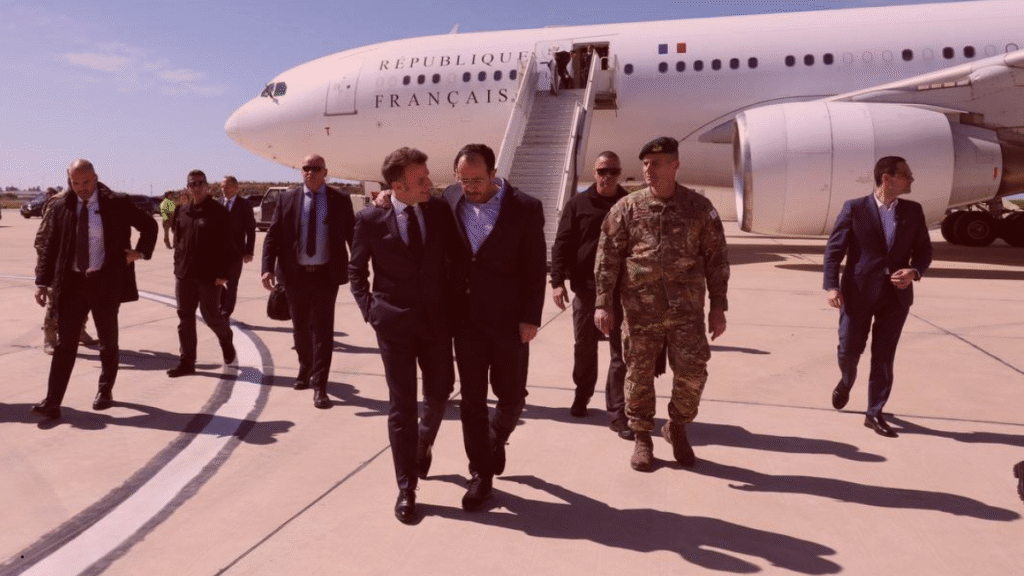
The Freedom and Fairness for Northern Cyprus campaign strongly condemns the signing of the Status of Forces Agreement between the Greek Cypriot administration and France, which establishes a legal framework for the stationing and operation of French military personnel in South Cyprus.

This agreement represents a further step in the ongoing militarisation of South Cyprus and follows an expanding network of military and strategic cooperation between the Greek Cypriot administration and foreign powers, including France, Greece and Israel. At a time when confidence-building and regional stability should be the priority, the decision to deepen foreign military involvement on the island sends entirely the wrong message.

The Greek Cypriot leadership has sought to present this arrangement as a humanitarian agreement. Such a characterisation is difficult to reconcile with the substance of the agreement itself. An arrangement which provides for the deployment of foreign military personnel, enhanced defence cooperation, access to facilities and expanded military coordination is, by any reasonable assessment, a defence agreement. The public deserves clarity regarding the true nature of what has been agreed.

Of particular concern is the fact that this agreement has been concluded without any consultation with the Turkish Cypriot people, the Turkish Republic of Northern Cyprus, or the other guarantor powers on the island, namely Türkiye and the United Kingdom. Given the implications such arrangements have for the security and strategic balance of Cyprus, the exclusion of key stakeholders raises serious questions about both the process and intent behind the agreement.

Cyprus is not a unitary state represented solely by the Greek Cypriot administration. It remains an island inhabited by two peoples, with two administrations, whose political future has yet to be resolved. The continued practice of making unilateral decisions affecting the security, strategic direction and future of the entire island, while claiming to act on behalf of all Cypriots, remains one of the central obstacles to building trust between the two sides.

For more than fifty years, Cyprus has enjoyed a period of relative peace and stability. Rather than pursuing policies which encourage cooperation, mutual confidence and meaningful engagement between the two sides, the Greek Cypriot administration has increasingly chosen a path which combines the international isolation of the Turkish Cypriots with the growing militarisation of South Cyprus through external partnerships and foreign military involvement.

This approach is both unnecessary and deeply concerning. Efforts to alter the strategic balance on the island without the participation or consent of the Turkish Cypriot side risk increasing tensions, undermining confidence and further complicating an already unresolved dispute.

The future security of Cyprus cannot be determined over the heads of the Turkish Cypriot people. Any sustainable approach to the island’s future must recognise that decisions affecting its security, sovereignty and stability concern both peoples and cannot be imposed unilaterally by one side.

The Freedom and Fairness for Northern Cyprus campaign therefore calls upon both France and the Greek Cypriot administration to reconsider this course of action and to pursue policies which contribute to stability, dialogue and regional cooperation rather than further militarisation.

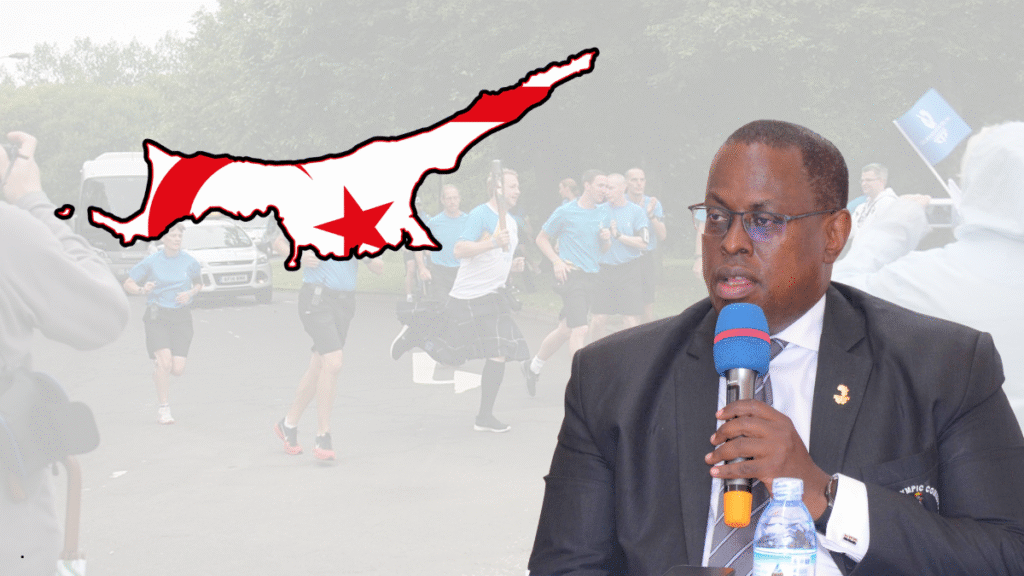
Letter Addressed to the Commonwealth Sports Executive Board Regarding the Exclusion of Turkish Cypriots from Commonwealth Torch Events in Cyprus

Dear Dr Rukare,

I hope this letter finds you well.

I am writing on behalf of the Freedom and Fairness for Northern Cyprus (FFNC) campaign regarding the decision to carry the Commonwealth Torch exclusively within the Greek Cypriot Administration of Southern Cyprus during its visit to the island between 20–23 May 2026, whilst completely excluding the Turkish Cypriot people.

We believe this decision is deeply regrettable and inconsistent with the values of equality, inclusiveness, and fairness that the Commonwealth seeks to uphold.

For decades, Turkish Cypriots have faced unjust isolation in international sport, culture, and diplomacy. Despite repeated calls for engagement and inclusion, Turkish Cypriot athletes and institutions continue to encounter barriers that prevent them from participating equally in the international sphere. Against this backdrop, the complete exclusion of Northern Cyprus from an event intended to symbolise unity, friendship, and shared Commonwealth values has caused significant disappointment amongst Turkish Cypriots both on the island and abroad.

Cyprus is not home to a single political or social reality. It is an island with two peoples, two administrations, and a long and complex history. Ignoring one side of the island entirely, particularly in the context of a symbolic international event, risks reinforcing division rather than encouraging understanding or inclusivity.

As an organisation committed to fairness, dialogue, and peaceful engagement, FFNC firmly believes that sport and symbolic international initiatives should serve as bridges between peoples rather than reflect longstanding political exclusions.

We therefore respectfully urge the Commonwealth Sport Executive Board to reflect on the concerns being raised by Turkish Cypriots and to consider how future Commonwealth initiatives involving Cyprus can better represent both peoples on the island in a fair and balanced manner.

The Turkish Cypriot people should not continue to be overlooked in international sporting and cultural platforms that claim to stand for equality and inclusiveness.

Yours sincerely,

Freedom and Fairness for Northern Cyprus (FFNC)